Build the business you want without losing the life you want.

The way you build matters.

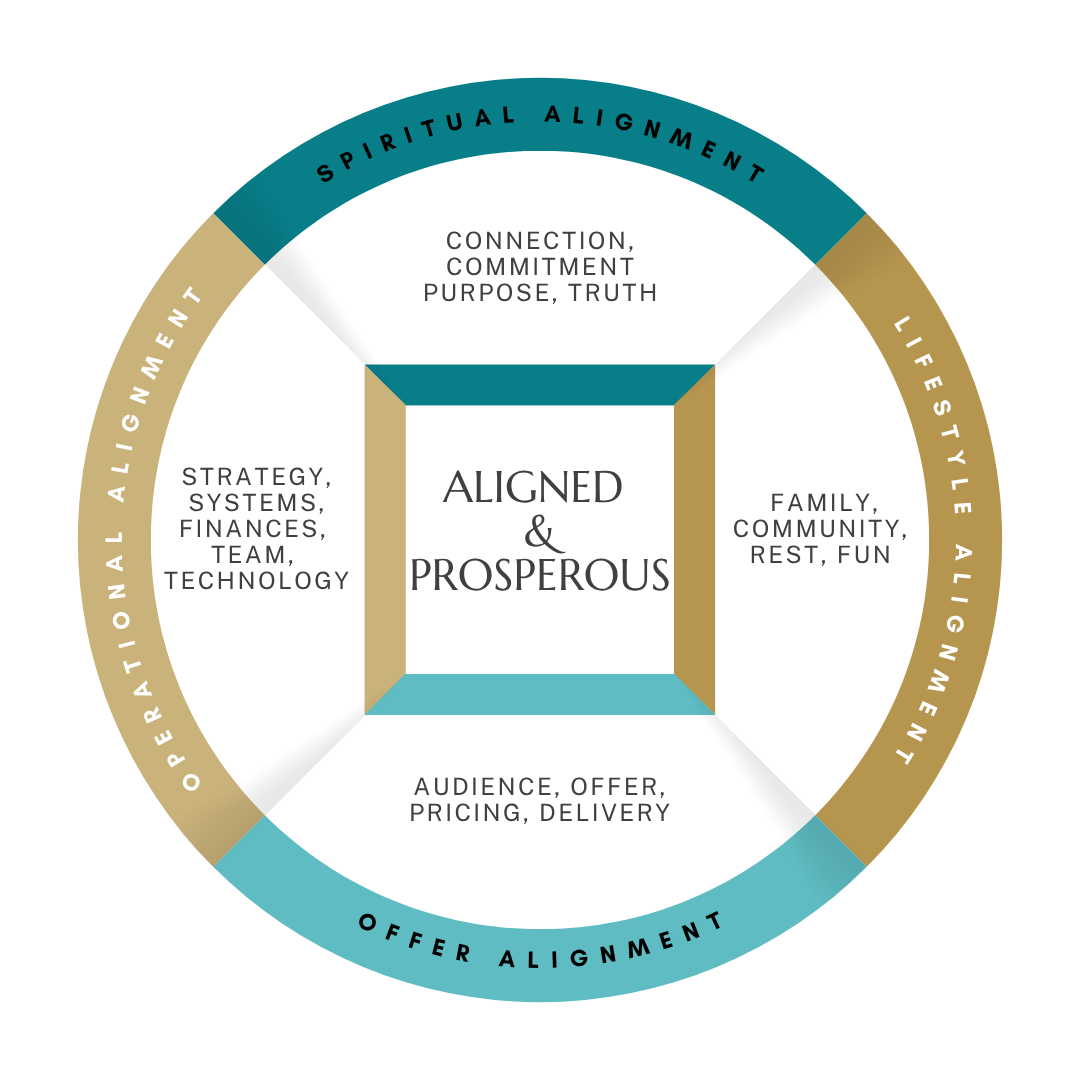
Align & Prosper is the philosophy behind The Aligned Biz Co.

Four lenses. One philosophy.

It gives you four lenses for evaluating the business you're creating: what you believe, how you want to live, what you want to sell, and how the company needs to operate.

Because "Can this make money?" is an important question.

But it shouldn't be the only one.

Four lenses philosophy
01

Spiritual Alignment

Build in agreement with what you believe.

Your values, faith, convictions, and sense of purpose influence how you make decisions.

They affect what you sell, who you serve, what you say yes to, what you refuse, how you lead, and what you're willing to do for money.

Spiritual alignment asks:

Does this business allow me to build in agreement with who I am and what I believe I'm here to contribute?

For some, the answer is explicitly rooted in faith.

For others, it begins with values and purpose.

The point is the same: success should not require you to repeatedly act against what matters to you.

02

Lifestyle Alignment

Decide what you want the business to make possible.

Revenue matters.

So does Tuesday afternoon.

  • How much do you want to work?
  • What responsibilities do you already carry?
  • What kind of schedule do you want?
  • What do your relationships, health, family, rest, interests, and other priorities require from you?
  • How much complexity are you willing to manage?

Lifestyle alignment asks whether the way you're building can support the life you actually want to live.

Your business gets a place in your life.

It doesn't automatically get all of it.

03

Offer Alignment

Build around value you want to keep delivering.

A profitable idea can still be the wrong business for you.

Offer alignment considers the relationship between:

what you know
what you've lived
what you do well
what you care about
what buyers want help with
how you want to deliver the work
what the market will support
what the work requires from you

Your career may contribute to the answer.

It doesn't have to define it.

The goal is to find the part of what you have that can create meaningful value for another person, then shape it into an offer that works on both sides of the sale.

04

Operational Alignment

Build a company that can carry more of its own weight.

In the beginning, you may do almost everything.

That doesn't mean the company should always depend on you for everything.

Operational alignment looks at the structure behind the business:

Marketing
Sales
Technology
Delivery
Communication
Financial systems
Customer experience
Follow-up
Team
Automation
Decision-making

The question is simple:

Can the business work without requiring you to personally remember, manage, approve, create, or deliver every moving part?

As the company grows, the answer should increasingly become yes.

Alignment Changes the Decisions

Instead of asking only

"Can this make money?"

Ask
  • Do I want to build it?
  • Does the market want it?
  • Can I deliver it well?
  • Does the model support the way I want to live?
  • Can the business become less dependent on me as it grows?

Those questions shape a different kind of company.